The Morgridge Institute and the general public came together on October 21 for a hybrid webinar in the Fearless Science Speaker Series to discuss why trust in science is eroding and what can be done to regain public trust.
The panel of experts included Pilar Ossorio, Morgridge Investigator and UW–Madison Professor of Law and Bioethics, Dietram Scheufele, Morgridge Investigator and UW–Madison Vilas Distinguished Achievement Professor and Taylor-Bascom Chair in Science Communication, and Brad Egulbrand Carl. Chairman and CEO of the Morgridge Institute and Professor of Medicine and Biomolecular Chemistry at UW–Madison.
Below is a condensed transcript of selected questions and highlights from the discussion. A recording of the webinar can be viewed in full above.
Introduction to faith in science

Brad Schwartz: Society treats science in a very particular way, and they do so from the implicit understanding that the things we do will ultimately return benefits to society. The University of Wisconsin and the State of Wisconsin have a long history of honoring this social contract. We think it’s just as important to spend time explicitly talking about this social contract, and that’s one of the reasons we’re meeting tonight to talk explicitly about trust, because there’s no good functioning contract if there’s no trust. among the participants. .
Pilar Ossorio: I think that being credible means essentially living up to our scientific obligations to each other as scientists and to the public. So this means applying our scientific methods appropriately and reporting our data fully and honestly. It means not jumping to conclusions beyond what the data supports, and I think to some extent, it means being willing to participate and accept that we have some oversight.
Dietram Scheufele: How much trust is good for society? It’s a scale. It’s a spectrum. This country does not function without science. Our politics, our social functions, do not function without science. So zero trust levels are not good. I will argue that 100% faith is also not good if we all blindly trust science. We need a critical discussion of what science can do and what science should do. We want to be somewhere in the middle where there is a broad respect for science as our best way to know and create knowledge, to curate knowledge with a healthy level of skepticism.
What Do scientists have a responsibility to help counter misinformation about science?
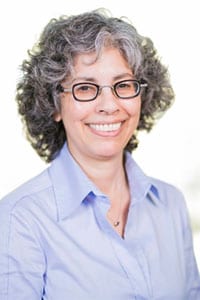
Osorio: We have to be careful not to overstate our expertise as people in the scientific community and sometimes say, “here are some reasons why I’m skeptical of this claim, and here are some places I can go to look for further information. Or here is a colleague who is actually very skilled in this area, who can give us more information.” Yes, we have responsibilities, but there are many ways to carry out those responsibilities, and the ways we do that don’t always involve us simply directly trying to counter disinformation.